

Agency Management Software: Keep More Retainer Revenue
Agency management software has quietly become the backbone of how service businesses run client work, yet most platforms still focus on tasks, timesheets, and billing instead of the relationships that actually pay the bills. For marketing agencies, consultancies, and fractional teams built on retainers, that gap matters: a project can finish on time and on budget while the client quietly decides not to renew. The right platform needs to track work and watch the relationship at the same time.
Quick answer: Agency management software is a platform that organizes client work, team capacity, and communication in one place. The best versions go further by continuously scoring relationship health, so teams catch churn risk before a renewal is lost, not after.
Daily visibility into client health is central to modern agency management software.
What Is Agency Management Software?
Agency management software is a platform that helps service businesses organize client work, team capacity, billing, and communication in one connected system. In addition, the stronger platforms monitor the health of each relationship, not only the status of each project.
Historically, agencies cobbled this together from a project tool, a spreadsheet, and whatever the account manager remembered from the last call. Consequently, warning signs got missed because no single system connected delivery data to relationship signals. A unified platform closes that gap by pulling from the CRM, billing, calls, and meetings an agency already uses.
Why Retention Deserves Equal Weight to Task Tracking
For retainer-based businesses, renewed revenue is the whole model. Therefore, a tool that only tracks hours and deliverables misses the metric that matters most: whether the client sticks around. Research popularized by Bain & Company found that increasing customer retention by just 5 percent can lift profits by 25 to 95 percent, depending on the industry. That single statistic explains why so many agency leaders are rethinking what their operating platform should actually measure.
Similarly, the first 30 days of a client relationship often predict whether it survives to renewal. A platform that tracks onboarding milestones alongside task completion gives teams an early, honest signal of where a client stands. Regular delivery updates help as well: when each team member sends the client a short end-of-day report on what got done, progress stays visible without an extra status call. Agencies running remote or VA teams often use an end-of-day reporting tool for agencies to keep it consistent.
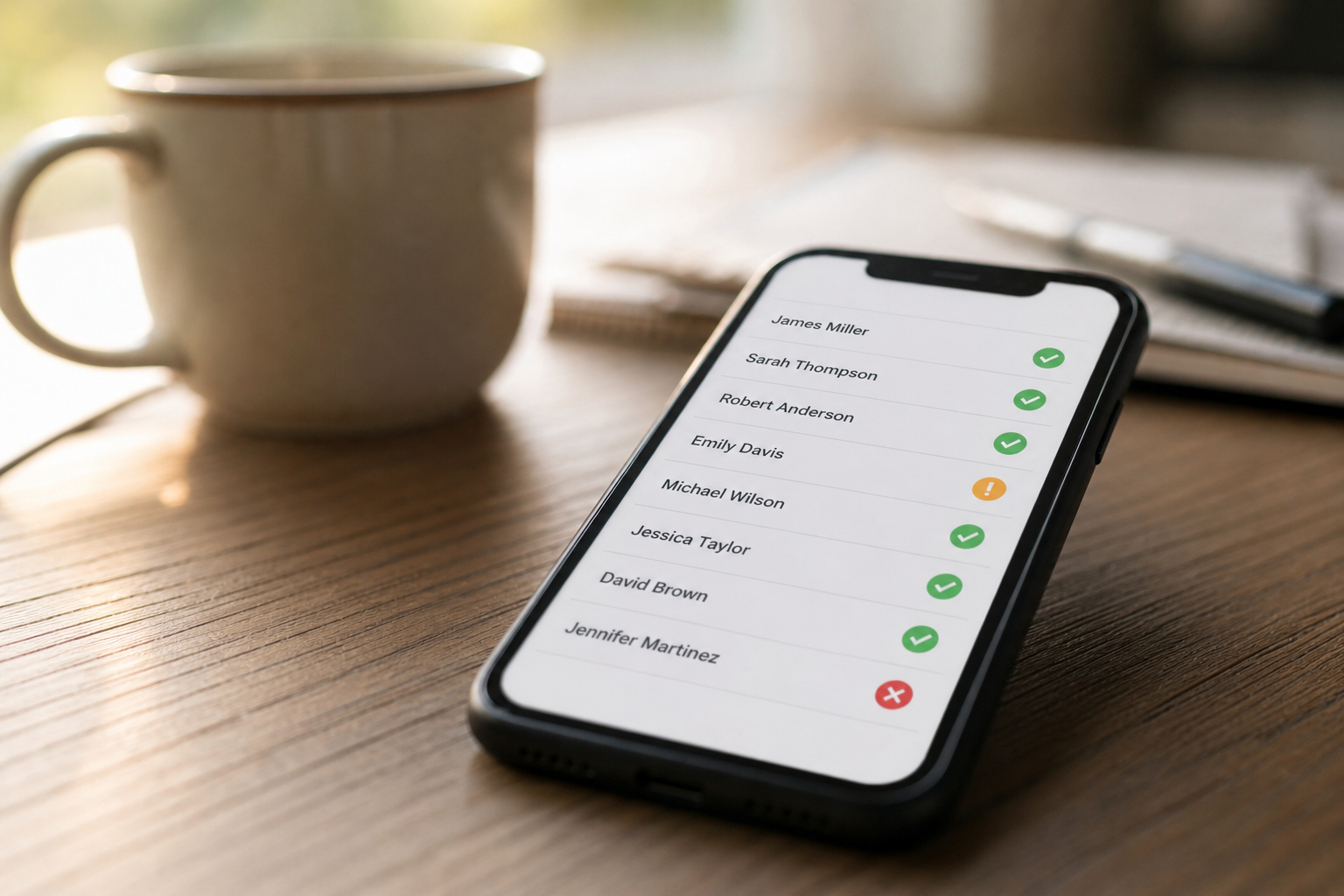
A daily brief turns scattered client signals into a short, actionable list.
Core Features of Strong Agency Management Software
Not every platform labeled as agency management software covers the same ground. Specifically, the categories below separate basic project trackers from systems built to protect recurring revenue.
Continuous relationship scoring: a running 0–10 style health score for every client account, updated daily rather than reviewed quarterly.
Read-only integrations: connections to the CRM, billing platform, meeting tools, and call transcripts, so data flows in automatically.
Daily briefs: short summaries sent to Slack, email, or text that tell a team who needs attention and why.
Churn intervention playbooks: documented steps for at-risk accounts, so a response does not depend on one person's memory.
Renewal and expansion surfacing: flags for upsell or renewal conversations based on engagement trends, not guesswork.
Together, these features shift a platform from a passive record-keeper into an active early-warning system. For a deeper breakdown of evaluation criteria, this buyer's guide to client retention software for agencies walks through vendor comparisons in detail.
How to Implement an Agency Management Platform
Rolling out new software mid-engagement can feel risky. However, a structured sequence keeps client work undisturbed while the new system comes online.
Audit current tools and data. Review the CRM, billing system, project tool, and meeting records already in use so the new platform maps to real workflows instead of creating duplicate systems.
Connect read-only integrations. Link the agency management software to existing tools through read-only connectors so client data flows automatically without manual re-entry by the team.
Configure retention scoring and alerts. Set thresholds for relationship health scoring and decide which risk signals should trigger an alert to the account owner immediately.
Train the team on the new cadence. Walk client success managers through the daily brief, the dashboard, and the escalation protocol so everyone knows what to do with each alert.
Monitor results and refine playbooks. Track churn rate, renewal timing, and engagement trends after launch, then adjust intervention playbooks based on what actually saves accounts.
A one-week guided installation, rather than a self-serve setup, tends to shorten this timeline considerably because the heaviest lift — mapping workflows and configuring integrations — happens with support instead of trial and error.
Agency Management Software vs. a Traditional CRM
A customer relationship management (CRM) system remains essential for tracking contacts and sales pipeline. However, it was never designed to score ongoing relationship health or flag delivery-stage churn risk. The table below outlines the practical difference.
Capability | Traditional CRM | Retention-Focused Platform |
|---|---|---|
Primary focus | Sales pipeline, contacts | Post-sale relationship health |
Churn alerts | Rarely built in | Continuous, daily scoring |
Data sources | Manual entry heavy | Pulls from calls, billing, meetings |
Relationship to CRM | — | Integrates with, does not replace |
For agencies weighing both categories together, this renewal and retention management software guide compares how each category fits into a broader tech stack.

Retention playbooks work best when the whole client services team owns them together.
Choosing the Right Agency Management Software for Your Team
Above all, the right choice depends on the size and structure of the agency. A team managing five or more active client accounts on recurring retainers will get far more value from continuous health scoring than a solo operator with just a couple of clients. In contrast, pre-revenue businesses or teams still proving their service model should wait until they have a steady roster before adding this layer.
ClientBloom is one option built specifically for this stage: an AI-powered business intelligence agent scores every client relationship daily, sends a morning brief to Slack, email, text, or Telegram, and ships with a one-week guided installation that includes integrations and team training. It connects to the CRM and billing tools an agency already runs rather than replacing them, which matters for teams that do not want to migrate systems mid-retainer. The guide to AI client experience platforms for agencies covers how AI-driven scoring compares to manual QBR reviews, and the ClientBloom platform overview details specific integrations supported today.
Whichever vendor an agency evaluates, the ClientBloom resource hub and the broader category of retention-focused tools share one goal: turning scattered client signals into a daily habit the whole team can act on.
Frequently Asked Questions
What is agency management software?
Agency management software is a platform that helps service businesses organize client work, team capacity, billing, and communication in one connected system. The strongest versions also monitor relationship health so teams can spot problems before a client leaves.
How is agency management software different from a CRM?
A traditional CRM mainly tracks sales pipeline and contact history, while agency management software manages the full client lifecycle, including onboarding, delivery, and retention. Most retention-focused platforms connect to your existing CRM rather than replacing it.
Why does client retention matter more than task tracking alone?
Task tracking keeps projects on schedule, but it does not tell you whether a client is happy or at risk of leaving. A 5 percent increase in retention can raise profits by 25 to 95 percent, according to research popularized by Bain & Company, which is why relationship health deserves equal attention.
How much does agency management software typically cost?
Pricing varies widely based on the number of client accounts, integrations, and whether the vendor includes hands-on setup support. Agencies should weigh the monthly cost against the revenue at risk from preventable churn before comparing price alone.
How long does it take to implement a new agency management platform?
A focused implementation, including integrations and team training, often takes about one to two weeks when the vendor provides guided setup. Self-service tools without support can take considerably longer because the team must map workflows alone.
What integrations should agency management software support?
Look for read-only connectors to your CRM, billing system, meeting and call transcript tools, project management platform, and automation tools like Zapier. These integrations let the software build an accurate picture of client health without duplicate data entry.
Can agency management software predict which clients will churn?
Platforms that include continuous relationship scoring can flag early warning signs, such as declining engagement or missed milestones, well before a client formally cancels. This early warning gives account teams time to intervene with a targeted outreach plan.
What common mistakes do agencies make when choosing this software?
A frequent mistake is picking a tool based on project management features alone and ignoring whether it surfaces relationship risk. Another is skipping team training, which leaves a powerful platform underused after launch.
Is agency management software suitable for small or solo businesses?
Most retention-focused platforms are built for established teams managing a meaningful roster of active client accounts, not solo operators with only a handful of clients. Businesses still building their first few accounts typically get more value from simpler project tools first.
What best practices help agencies get the most from this software?
Successful agencies review relationship health scores on a daily cadence, assign clear owners to at-risk accounts, and document churn interventions as repeatable playbooks. Consistent review habits matter more than any single feature.
Does agency management software replace a CRM or project tool?
No, retention-focused agency management software is designed to connect with the CRM and project tools a team already uses rather than replace them. It layers relationship intelligence on top of existing systems.
How does a morning brief feature help with client retention?
A morning brief delivered to Slack, email, or text summarizes which clients need attention that day and why, so account teams act on risk signals immediately. This turns scattered data into a short, repeatable daily habit.
Final Thoughts on Agency Management Software
In the end, the agencies that protect recurring revenue are the ones that treat relationship health as seriously as project delivery. Agency management software can cover both when it combines task visibility with continuous retention scoring, integrated data, and a daily habit of checking who needs attention. As a result, choosing a platform built around client outcomes, not just checklists, tends to pay for itself through fewer surprise cancellations and more confident renewal conversations.


