Customer churn rate calculation is the starting point for any service business that wants to protect its recurring revenue. Before your team can fix a leaky client base, you need an accurate number showing how many customers you're losing — and how fast. This guide walks through the exact formulas, a step-by-step process, and the mistakes that quietly distort churn numbers, so you know exactly where your agency, consultancy, or coaching business stands today.
Quick answer: Customer churn rate calculation divides the number of customers lost during a period by the number of customers you had at the start of that period, then multiplies by 100. For example, losing 4 clients out of 80 in a month produces a 5% monthly churn rate.
What Is Customer Churn Rate Calculation?
Customer churn rate calculation is the process of measuring what percentage of customers, or what percentage of revenue, a business loses over a specific period. In its simplest form, you divide the number of customers lost during a period by the number of customers you started with, then multiply by 100.
For service businesses such as marketing agencies, consultancies, and coaching practices, this single number drives nearly every strategic decision, from pricing to hiring. According to Wikipedia's overview of customer attrition, churn is widely used across subscription, telecom, and professional services industries because it directly predicts long-term revenue stability. However, a raw percentage alone does not explain why clients leave — it only confirms that they did.
In particular, service businesses that bill on retainers or recurring contracts rely on churn data to forecast revenue, plan staffing, and justify sales and marketing spend. As a result, getting the calculation right matters just as much as acting on what it reveals.
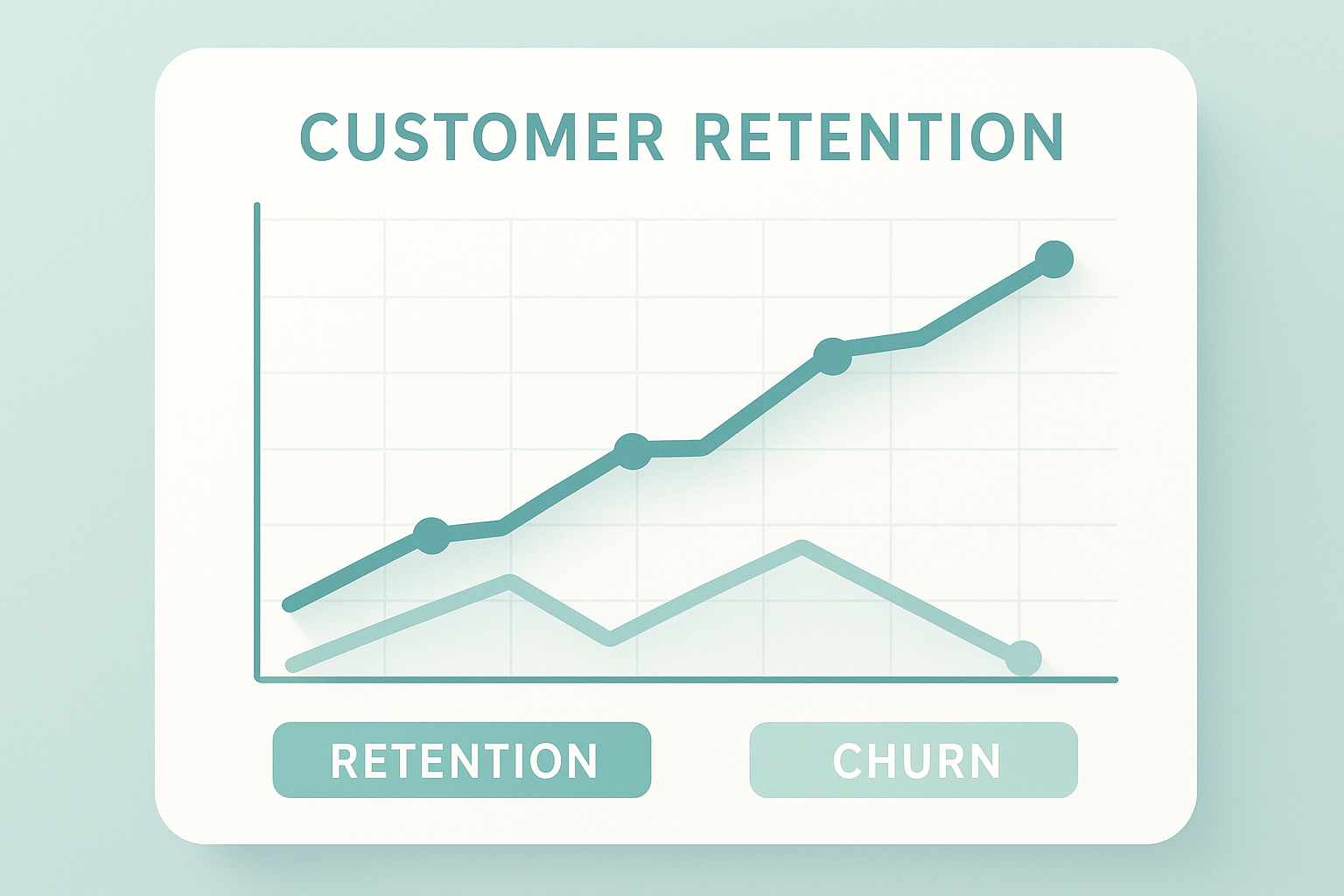
Tracking customer churn rate calculation over time reveals patterns that a single snapshot cannot.
The Core Churn Rate Formula (And Why It Matters)
The standard formula looks like this: Churn Rate = (Customers Lost ÷ Customers at Start of Period) × 100. Specifically, if you began the quarter with 120 active clients and lost 9 of them, your churn rate is (9 ÷ 120) × 100, or 7.5%.
Formula at a glance
Churn Rate (%) = (Customers Lost in Period ÷ Customers at Start of Period) × 100
Similarly, you can swap "customers" for "monthly recurring revenue" to calculate revenue churn instead, which is covered in more detail below. Above all, consistency matters more than precision on any single calculation — using the same period and the same definition of "lost" every time is what makes churn trends trustworthy.
How to Calculate Customer Churn Rate Step by Step
Use this five-step process to calculate customer churn rate accurately and avoid the common errors covered later in this guide.
- Define your measurement period. Choose a consistent time frame, such as monthly, quarterly, or annually, and use that same period every time so comparisons remain meaningful over time.
- Count customers at the start of the period. Record the exact number of active, paying customers on the first day of the period, excluding trials or accounts already canceled.
- Count customers lost during the period. Tally every customer who canceled or did not renew within that same window, keeping downgrades separate if you track them independently.
- Apply the formula. Divide customers lost by customers at the start of the period, then multiply by 100 to express the result as a percentage.
- Calculate revenue churn alongside customer churn. Repeat the formula using lost recurring revenue instead of customer count, since this reveals whether you are disproportionately losing your highest-value accounts.
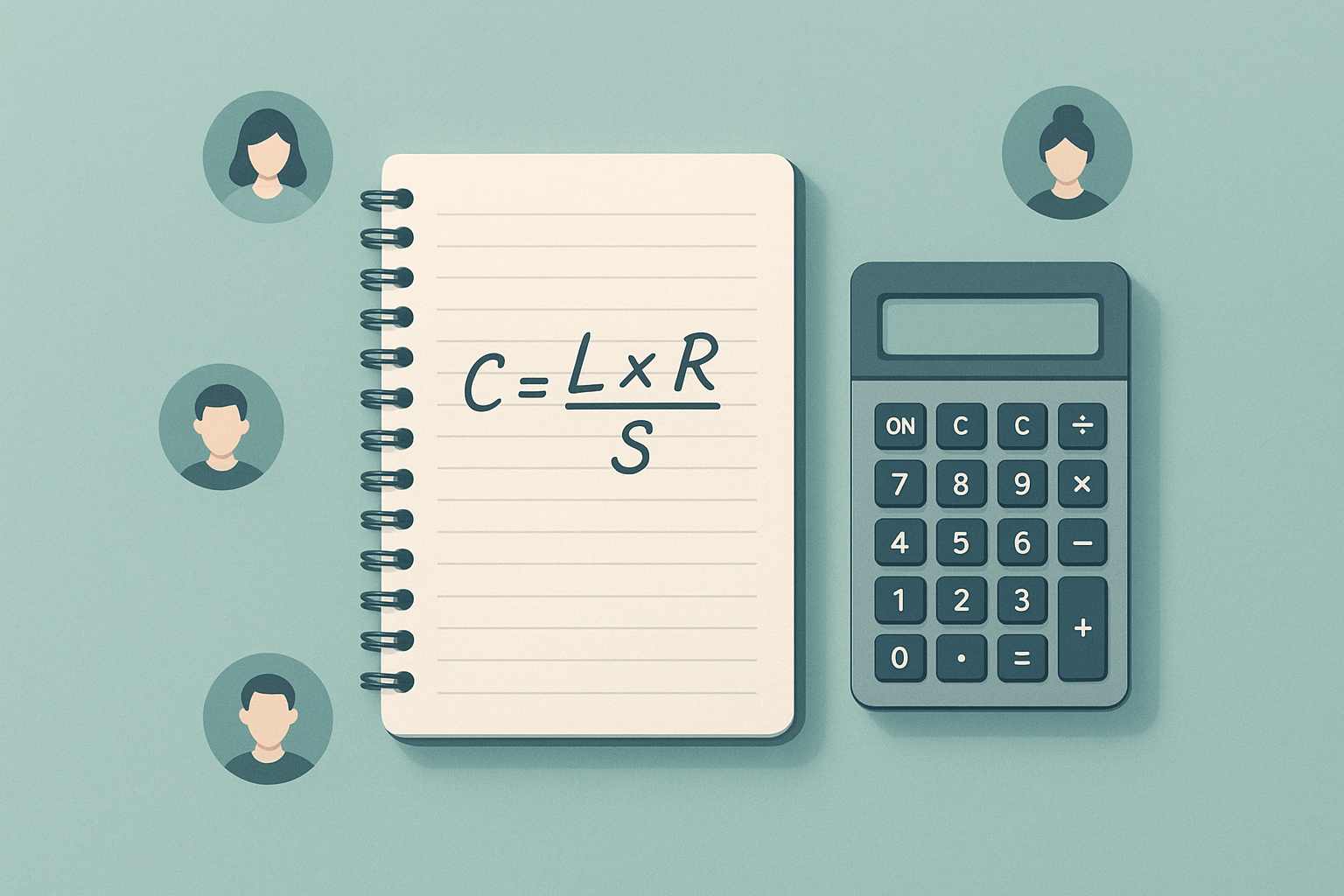
A consistent, repeatable process keeps your churn numbers comparable month after month.
Customer Churn vs. Revenue Churn: What's the Difference?
Customer churn counts how many accounts you lost, regardless of their size. In contrast, revenue churn measures how much recurring revenue walked out the door with them. Therefore, a business can lose very few clients but still suffer significant revenue churn if those accounts happened to be its largest contracts.
There is also a distinction between gross churn and net churn. Gross churn only counts losses from cancellations and downgrades, while net churn offsets those losses against expansion revenue from upsells and renewals. Consequently, a business with strong expansion revenue can post negative net churn, meaning it grew revenue from existing clients faster than it lost it elsewhere.
Common Mistakes That Distort Churn Rate Calculations
Even simple formulas go wrong when the underlying data is inconsistent. For example, mixing measurement periods, such as comparing a 30-day month to a 31-day month without adjustment, can quietly skew your trend line.
In addition, teams often forget to exclude newly added customers from the "starting" count, which inflates the apparent churn percentage. Another frequent error is conflating customer churn with revenue churn in reporting, which can mask the fact that you are losing a small number of very large accounts. Finally, failing to agree on what counts as "lost" — a full cancellation versus a paused account, for instance — makes month-over-month comparisons unreliable.
What's a Good Churn Rate for Service Businesses?
Most established agencies and consultancies aim for annual churn below 10 to 15%, which roughly translates to around 1% per month. Rates meaningfully above that range usually point to onboarding gaps, inconsistent delivery, or weak communication cadence.
The stakes are high: according to research popularized by Harvard Business Review and Bain & Company, increasing customer retention by just 5% can increase profits by 25% to 95%, depending on the industry. As a result, even a one- or two-point improvement in churn rate can represent a meaningful amount of annual revenue for a retainer-based business.
Every stage of the client journey is a point where churn can quietly begin.
Why Churn Rate Calculation Alone Won't Stop Client Attrition
However accurate your math, customer churn rate calculation is inherently backward-looking. It tells you what already happened, not which specific clients are at risk right now. That's why many agencies pair historical churn tracking with a continuous client retention score that scores every active relationship daily on signals like engagement, billing activity, and meeting sentiment.
For teams with five or more active clients, this forward-looking approach closes the gap between "we lost a client" and "we saw this coming weeks ago." You can see your own numbers with a free churn rate calculator, then explore practical tactics in this guide on how to reduce client churn.
In particular, silent churn — clients who disengage quietly before canceling — rarely shows up until it's too late to intervene. This guide on stopping silent client churn outlines the early warning signs worth monitoring. For teams comparing retention platforms, this breakdown of ClientBloom versus ChurnZero explains how daily health scoring differs from traditional customer success software. You can learn more about the full platform at clientbloom.ai.
Frequently Asked Questions About Customer Churn Rate Calculation
What is customer churn rate calculation?
Customer churn rate calculation is the process of measuring the percentage of customers a business loses over a given period. It's calculated by dividing lost customers by the total customers at the start of the period, then multiplying by 100.
How do you calculate customer churn rate?
Divide the number of customers lost during a chosen period by the number of customers you had at the start of that period, then multiply by 100 to get a percentage. For example, 4 lost clients out of 80 starting clients equals a 5% churn rate.
What is a good churn rate for a service business?
Most established agencies and consultancies aim for annual churn below 10 to 15%, or roughly 1% monthly. Rates above this range usually signal onboarding, delivery, or communication problems worth investigating.
What is the difference between customer churn and revenue churn?
Customer churn counts how many accounts you lost, while revenue churn measures how much recurring revenue left with them. A business can lose a small number of customers but suffer high revenue churn if those accounts were large contracts.
How often should you calculate churn rate?
Monthly calculation is standard for most service businesses, with a rolling quarterly view to smooth out seasonal noise. Businesses with fewer, higher-value clients sometimes review churn weekly alongside relationship health scores.
What causes customer churn in agencies and consultancies?
Common causes include weak onboarding, inconsistent communication, missed milestones, unclear ROI, and staff turnover on the account. Most of these warning signs appear weeks before a client formally cancels.
What is the difference between gross churn and net churn?
Gross churn only counts revenue lost from cancellations and downgrades, while net churn offsets that loss with expansion revenue from upsells. Net churn can even be negative when expansion outpaces losses.
How much does high churn cost a service business?
Research popularized by Bain & Company found that increasing customer retention by just 5% can increase profits by 25% to 95%, depending on the industry. The inverse is also true: small increases in churn can quietly erase a large share of annual profit.
What are common mistakes in churn rate calculation?
Common mistakes include mixing time periods, ignoring new customers added mid-period, and conflating customer churn with revenue churn. These errors often make churn look better or worse than it actually is.
What is a client retention score and how does it relate to churn?
A client retention score is a continuous health rating, often on a 0 to 10 scale, that predicts churn risk before it shows up in historical churn rate calculations. It uses engagement, billing, and communication signals to flag at-risk accounts early.
Can churn rate calculation predict which clients will leave?
No, churn rate calculation is a backward-looking metric that reports what already happened, not a predictive one. Forward-looking tools, such as retention scoring, are needed to identify specific at-risk accounts before they cancel.
What tools help track and reduce customer churn?
CRM platforms track basic account data, while dedicated retention platforms combine CRM, billing, and engagement data into a single health score and alert system. Comparing options, such as ClientBloom and ChurnZero, helps teams choose the right fit for their client volume.
How do you reduce customer churn after calculating it?
Start by segmenting churned accounts to find shared causes, then build onboarding and check-in playbooks that address those gaps. Combining this with proactive at-risk alerts typically produces faster results than reacting after a cancellation notice.
Key Takeaways
Customer churn rate calculation gives service businesses a clear, repeatable way to measure how many clients — and how much revenue — they lose over time. By following a consistent formula, tracking both customer churn and revenue churn, and avoiding common measurement mistakes, agencies and consultancies can trust their numbers enough to act on them. However, since churn rate calculation only reports what already happened, pairing it with daily retention scoring and early-warning playbooks is what actually keeps more of the revenue you've already won.

