
Customer churn prediction software is the category of technology that spots which clients are likely to cancel or shrink their contract before it actually happens. For agencies, consultancies, and other recurring-revenue service businesses, that early signal is the difference between a quiet save and a surprise loss on the books. Instead of finding out about a cancellation in an offboarding email, teams get days or weeks of warning, along with a reason and a recommended next step. This guide breaks down what customer churn prediction software actually does, how the scoring works, and what to look for before you choose one for a client-services team.
Quick answer: Customer churn prediction software analyzes client engagement, billing, support, and meeting data to generate a daily risk score for every account, so client success teams know exactly who is likely to leave — and why — before the cancellation email arrives.
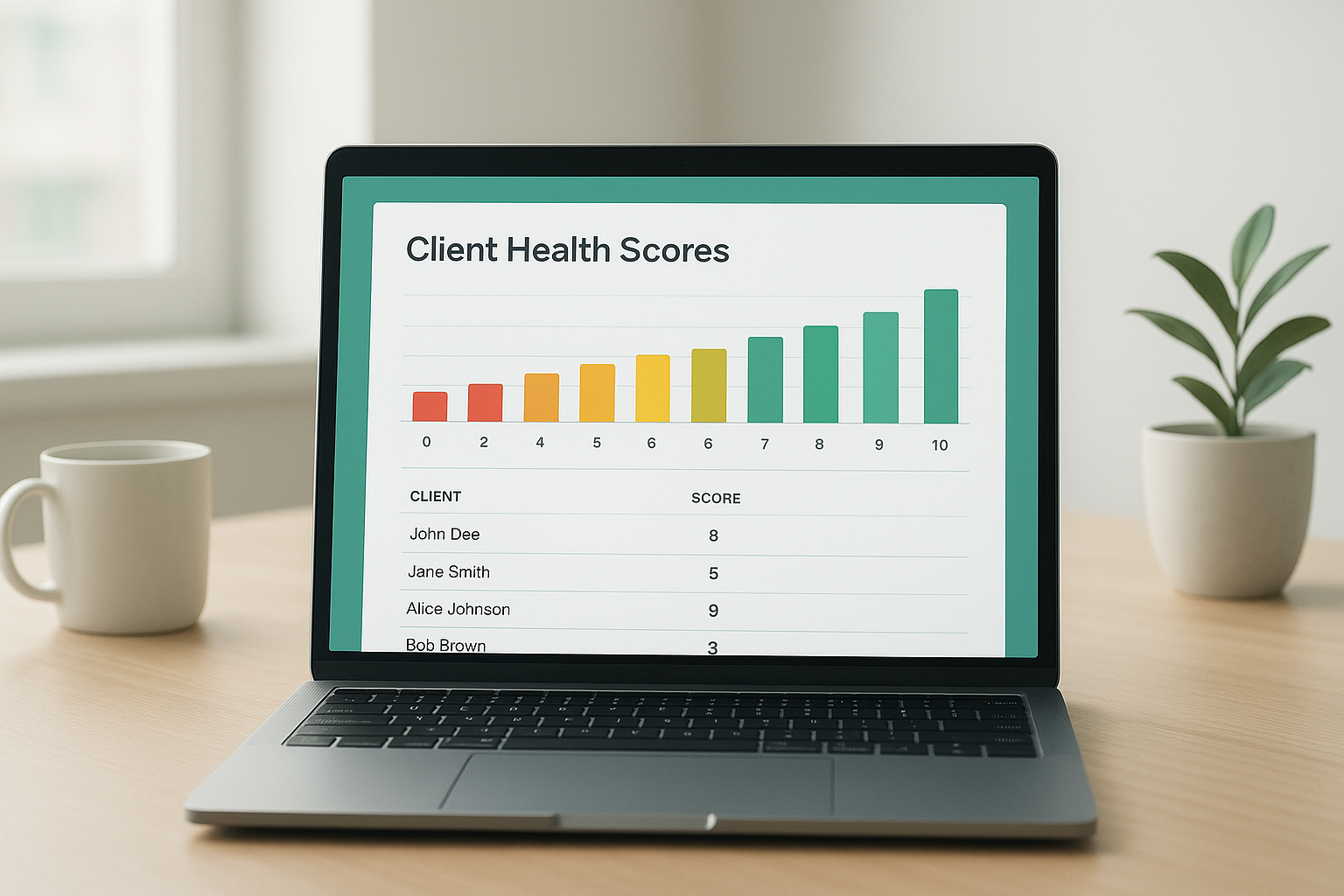
Customer churn prediction software turns scattered client data into a single daily risk score.
What Is Customer Churn Prediction Software?
Customer churn prediction software is a tool that continuously analyzes client behavior signals — engagement frequency, billing history, support tickets, meeting attendance, and even call transcripts — to estimate the likelihood that a client will cancel, downgrade, or fail to renew. Rather than relying on a single quarterly survey, the software updates its risk score daily, or in some cases in real time.
Most platforms in this category define churn narrowly, as the loss of a paying client relationship. However, the more useful software goes further and tracks the earlier, quieter signals — sometimes called silent churn — that show up weeks before a client actually leaves. Skipped meetings, slower email replies, and declining product usage are classic early warning signs. In addition, well-designed churn prediction software connects to the CRM, billing platform, and communication tools a team already uses through read-only integrations, so client success managers do not have to log activity manually.
The result is a single relationship health score for every account, refreshed automatically, that tells a manager who needs attention today. Wikipedia's overview of customer attrition frames the underlying concept well: churn is the rate at which customers stop doing business with a company over a given period, and predicting it early is what separates proactive retention teams from reactive ones.
Why Predicting Client Churn Early Matters
Client retention is not just a nice-to-have metric — it is the primary driver of profit for most service businesses. Research popularized by Bain & Company and cited in Harvard Business Review found that increasing customer retention rates by just 5% can increase profits by 25% to 95%, depending on the industry. For agencies and consultancies running on retainer revenue, that math is even more direct: a saved account often carries higher margin than a newly won one, because the onboarding cost has already been paid.
Consequently, the earlier a team spots risk, the cheaper the save. A client who is two weeks into declining engagement is far easier to re-engage than one who has already decided to leave and is simply working through their notice period. This is why so much churn happens silently, with warning signs visible in the data long before a client says anything out loud. For a deeper look at how these quiet risk signals show up before a cancellation call, see this breakdown of stopping silent client churn.
Above all, service businesses that rely on recurring contracts cannot treat retention as an afterthought. The U.S. Small Business Administration has repeatedly noted that repeat and referral business is one of the most cost-effective growth levers available to small and mid-sized firms, which makes early churn detection a revenue strategy, not just a support function.
How Churn Risk Scoring Actually Works
While every platform is built a little differently, most customer churn prediction software follows a similar sequence from setup to daily use. Here is the typical process:
- Connect read-only integrations to your CRM, billing system, meeting tool, and support platform so the software can see real client activity without manual entry.
- Establish a baseline health score for every account using engagement frequency, response times, meeting attendance, and payment history gathered over the first few weeks.
- Apply predictive scoring models that refresh daily, weighting recent behavior changes — like skipped calls or declining usage — more heavily than historical averages.
- Surface at-risk accounts through daily briefs delivered to Slack, email, text, or Telegram, so client success managers know exactly who to call and why.
- Track intervention outcomes and feed the results back into the model, so the churn prediction software gets more accurate with every account it helps save.
As a result, the scoring becomes more precise over time, because the model learns from every save and every loss.
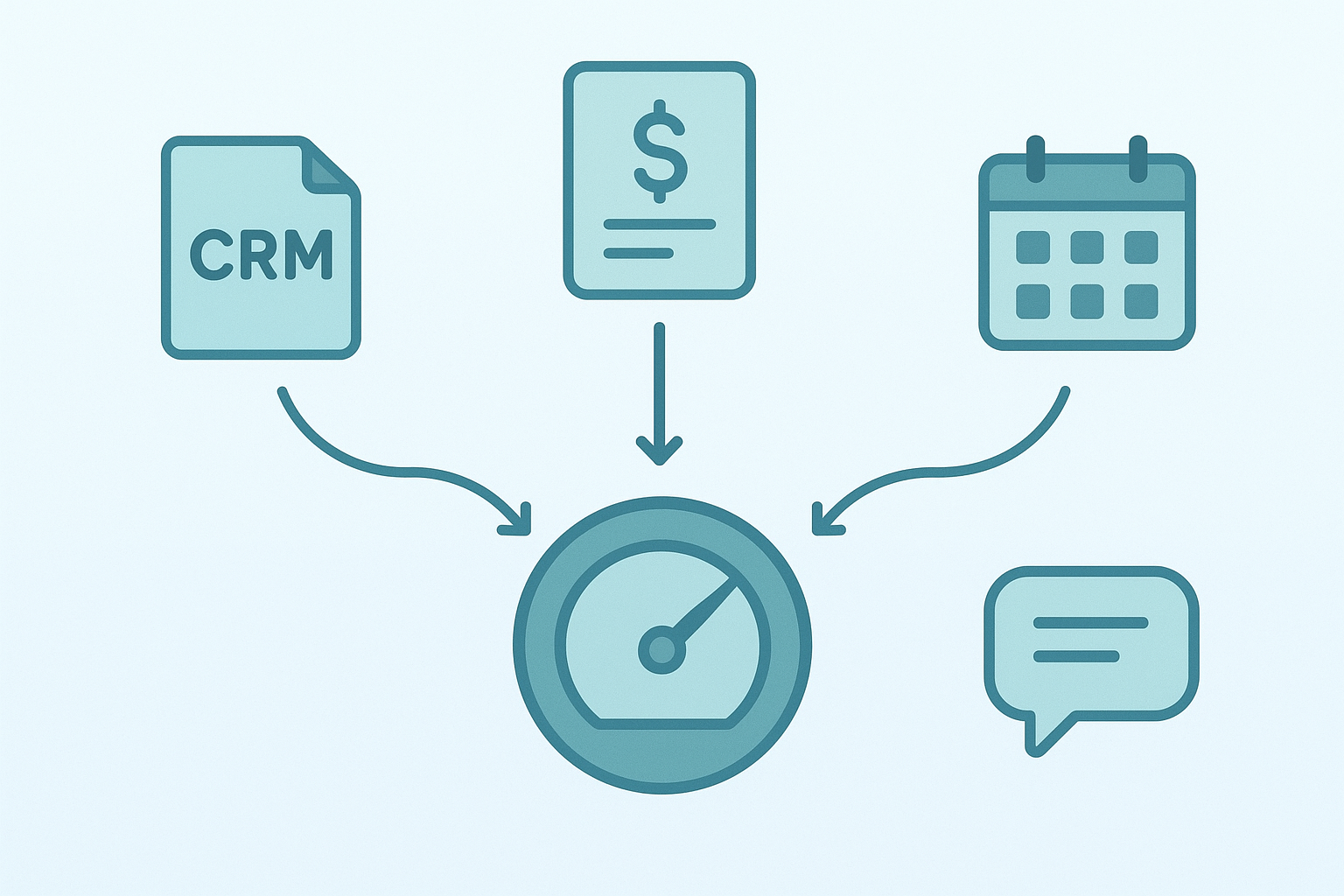
Data from the CRM, billing, and meetings all feed into a single churn risk score.
Key Features to Look for in Churn Prediction Tools
Not all churn prediction tools are built for the same job. Before choosing one, it helps to check for a specific set of capabilities.
- Continuous relationship scoring — a single 0–10 score per client, updated daily rather than quarterly. See what a client retention score actually measures.
- Read-only integrations — connections to CRM, billing, meetings, projects, call transcripts, and Zapier that do not require replacing existing systems.
- Daily briefs — a short, actionable summary sent where the team already works, rather than a dashboard nobody opens.
- Retention playbooks — pre-built intervention plays and escalation protocols for at-risk accounts, not just an alert with no next step.
- Renewal and expansion surfacing — flags for upsell-ready accounts alongside churn risk, since retention and growth run on the same underlying data.
Similarly, it is worth checking whether a platform was designed for agencies with five or more active clients, since tools built for large enterprise support teams often do not translate well to retainer-based service work.
Customer Churn Prediction Software vs. Traditional CRM Alerts
Many teams assume their CRM already does this job because it can flag overdue tasks or send renewal reminders. In contrast, customer churn prediction software is built specifically to model relationship health across many data sources at once, not just track pipeline stages.
A CRM alert typically fires on a single rule, such as "contract renews in 30 days." Churn prediction software, however, blends dozens of signals — engagement trend, sentiment in call transcripts, billing friction, meeting cadence — into one score, and it updates that score every day rather than waiting for a manual check-in.
For teams comparing specific platforms, it can help to see a side-by-side breakdown, such as this comparison of ClientBloom and ChurnZero, which walks through how each approaches scoring, integrations, and onboarding support for service businesses specifically.
How to Choose Churn Prevention Software for Your Team
Selecting a platform is easier when you know what your team actually needs day to day. Start by estimating the financial stakes: use a churn cost calculator to see how much revenue is realistically at risk if a handful of retainer clients leave this year.
Next, consider how the software will fit into the daily operating rhythm. For example, ClientBloom is built specifically as a client retention operating system for agencies, consultancies, coaching businesses, and fractional executives. It connects to the CRM, billing, and meeting tools a team already uses, scores every relationship from 0 to 10, and delivers a morning brief telling the team who to call and why. Because it installs in about a week with a guided audit and team training, rather than a long self-serve rollout, teams typically see their first at-risk save within the first month. You can review the full platform at ClientBloom if you want to explore how the scoring and briefs work firsthand.
Therefore, when evaluating any customer churn prediction software, ask three questions: Does it fit how our team already works? Does it come with a real onboarding process, not just a login? And does it turn risk scores into a specific next action, not just a red flag? For a broader walkthrough of the reduction process itself, this guide on how to reduce client churn is a useful next stop.

A daily brief turns churn prediction software output into a concrete team action.
Common Mistakes When Adopting Churn Prediction Software
Even good customer churn prediction software fails to deliver value when it is rolled out poorly. A few mistakes show up again and again.
First, teams sometimes connect every possible data source on day one without training anyone on what the score actually means, which leaves managers staring at a number they don't trust. Second, some businesses skip building an intervention playbook, so a red flag arrives with no agreed-upon next step. Third, a handful of teams try to use churn prediction as a replacement for their CRM rather than a layer on top of it, which creates duplicate systems and confused ownership.
Finally, many teams underestimate how much churn happens quietly, long before a client says anything critical. As a result, they wait for negative feedback instead of trusting the early behavioral signals the software is already surfacing. Avoiding these mistakes usually comes down to one thing: pairing the software with a clear operating cadence, so everyone knows who checks the brief, who owns outreach, and how escalations get handled from week one.
Frequently Asked Questions About Customer Churn Prediction Software
What is customer churn prediction software?
Customer churn prediction software is a tool that scores the health of every client relationship using behavior, billing, and communication data, then flags accounts likely to cancel before they actually do. Most platforms refresh this score daily and pair it with a recommended next action.
How does churn prediction software know which clients are at risk?
It combines signals such as engagement frequency, meeting attendance, payment history, and support ticket volume into a single risk score. When several of these signals move in the wrong direction at once, the software flags the account before a human would typically notice.
Is customer churn prediction software the same as a CRM?
No. A CRM tracks contacts, deals, and tasks, while churn prediction software analyzes ongoing relationship health across multiple data sources. The best setups connect to the CRM rather than replace it, so both systems work from the same underlying data.
How much does churn prediction software typically cost?
Pricing varies widely depending on the number of client accounts tracked and the depth of integrations required. Most platforms built for agencies and consultancies price per active client rather than per user, since value scales with the number of relationships monitored.
How long does it take to set up churn prediction software?
Setup time depends on how many tools need to be connected and how much team training is involved. Some platforms, including ClientBloom, are designed around a one-week installation that covers an audit, integration setup, and team training rather than a lengthy self-serve rollout.
What data does churn prediction software need to work well?
At minimum, it needs access to CRM records, billing history, and some form of engagement data, such as meeting attendance or email activity. Additional sources like call transcripts and support tickets improve accuracy but are not strictly required to get started.
Can small service businesses benefit from churn prediction software?
Established service businesses with a meaningful base of active clients, typically five or more, tend to see the most value, since the software's pattern detection works best across a larger portfolio. Very early-stage or pre-revenue businesses usually have too little relationship data for meaningful predictions yet.
What's the difference between churn prediction and customer satisfaction surveys?
Surveys capture a client's stated opinion at one point in time, while churn prediction software tracks ongoing behavior continuously. In practice, behavior often changes weeks before a survey score would ever reflect it, which is why prediction software catches risk earlier.
What mistakes do teams make when adopting churn prediction software?
The most common mistakes are rolling out the tool without training the team on what the scores mean, skipping a defined intervention playbook, and treating the software as a CRM replacement instead of a layer on top of it. Pairing the software with a clear operating cadence avoids most of these issues.
How accurate is customer churn prediction software?
Accuracy depends heavily on data quality and how many signals feed the model. Platforms that combine several behavioral data sources, rather than relying on a single metric like usage, tend to produce more reliable risk scores over time.
Does churn prediction software replace client success managers?
No. It is designed to make client success managers more effective, not to replace them. The software surfaces who needs attention and why, but a human still has the conversation, negotiates, and rebuilds the relationship.
What's a good client retention score to aim for?
This depends on the scoring scale a specific platform uses, but on a 0–10 scale, most healthy accounts should sit at 7 or above, with anything below 5 typically warranting an intervention. For a fuller explanation, see this guide to the client retention score.
How is churn prediction software different from generic business intelligence tools?
General business intelligence tools report on metrics after the fact, while churn prediction software is purpose-built to forecast a specific outcome, client loss, and recommend action. In addition, it typically comes with retention-specific playbooks and escalation protocols that generic BI dashboards do not include.
The Bottom Line on Customer Churn Prediction Software
Customer churn prediction software turns scattered client signals into one clear, daily answer: who is at risk, why, and what to do next. For agencies, consultancies, and other retainer-based service businesses, that early visibility is often the difference between a quiet save and a surprise loss on the books. Therefore, the real value is not the score itself, but the operating cadence built around it — the playbooks, the escalation protocols, and the team habits that turn a number into a saved account. Whether you evaluate ClientBloom or another platform, look for software that fits the tools your team already uses, comes with real onboarding support, and turns every risk flag into a specific next step.

