Churn calculation is the method service businesses use to measure how many clients, or how much recurring revenue, they lose over a given period. For agencies, consultancies, and coaching businesses that depend on retainers, getting this number right is not optional. In fact, a small miscalculation can mask a growing retention problem until it's too late. This guide walks through the exact churn calculation formula, a step-by-step process you can run this month, and the common mistakes that quietly skew the results most teams report to leadership.
Quick answer: Churn calculation divides the number of clients lost during a period by the number of clients you started with, then multiplies by 100 to get a percentage. Revenue churn uses lost recurring revenue instead of client counts. Most service businesses should calculate both monthly and track the trend, not just a single snapshot.
What Is Churn Calculation?
Churn calculation is the process of measuring the percentage of clients, or the percentage of recurring revenue, that a business loses during a specific time period — typically monthly, quarterly, or annually. It turns client departures into a single, trackable number.
For service businesses, churn calculation usually takes one of two forms. Customer churn, also called client churn, counts the number of accounts lost. Revenue churn, on the other hand, tracks the dollar value of recurring revenue lost, which matters more when client contract sizes vary widely. Consequently, an agency could lose five small clients and barely dent revenue churn, while losing one large retainer could spike it. Understanding both versions gives a fuller picture than either number alone.
Why Tracking Client Churn Matters for Service Businesses
Client churn directly determines how much new business a service company must win just to stay flat. For example, an agency with 20% annual churn needs to replace a fifth of its revenue every year before it can grow at all.
Research summarized by the Harvard Business Review has repeatedly found that acquiring a new customer can cost five to twenty-five times more than retaining an existing one. As a result, even small improvements in retention tend to produce outsized gains in profitability compared with equivalent gains in new sales. In addition, churn calculation gives leadership an early warning system. A rising number, tracked consistently, flags account health problems weeks or months before a client actually cancels — time that teams can use to intervene.
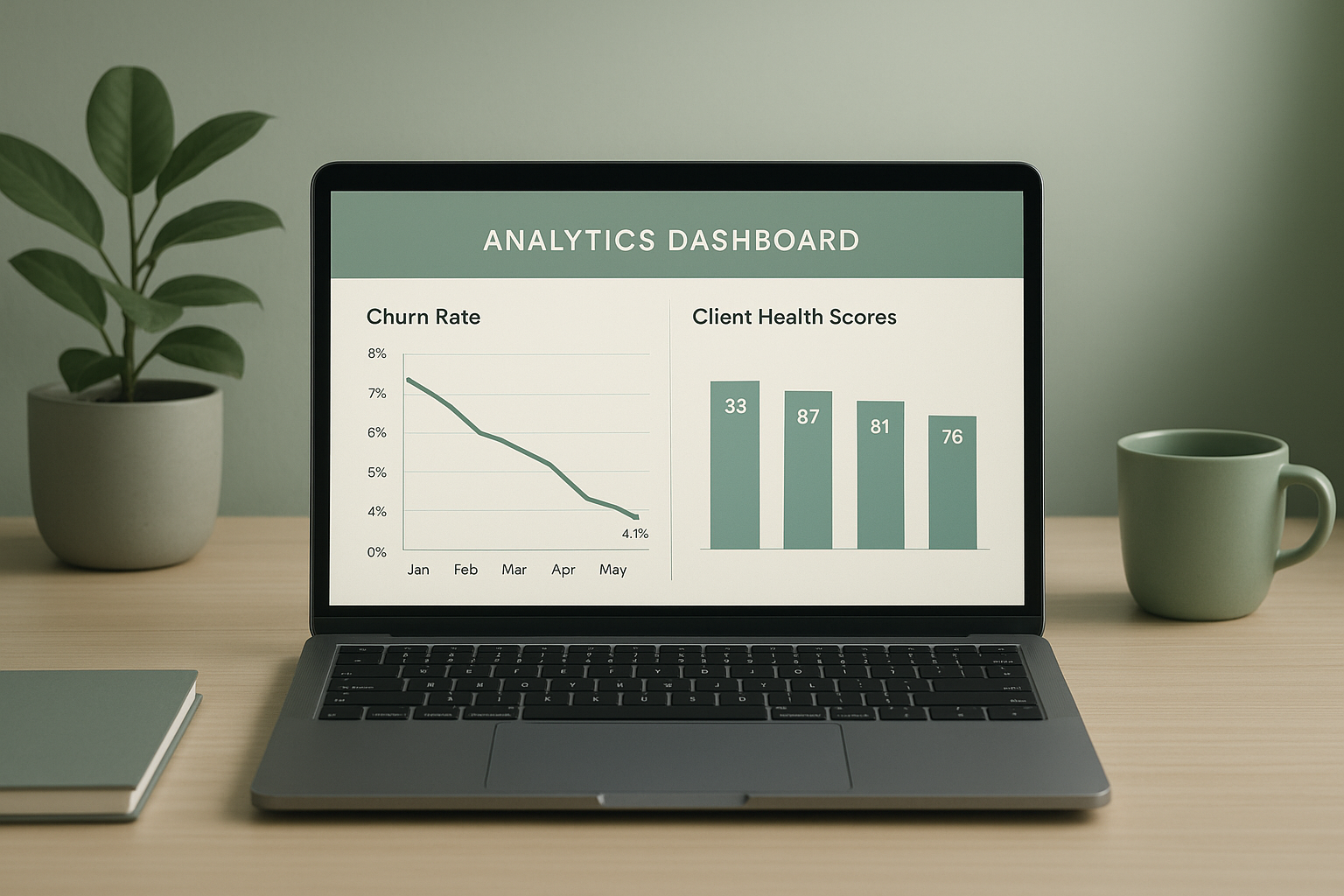
Tracking churn calculation trends on a dashboard helps teams catch problems early.
The Churn Calculation Formula Explained
The standard churn calculation formula is straightforward: divide the number of clients lost during a period by the number of clients at the start of that period, then multiply by 100.
For example, imagine an agency starts the month with 50 active retainer clients and loses 3 during that month. Dividing 3 by 50 gives 0.06, and multiplying by 100 produces a 6% monthly churn rate. Similarly, revenue churn calculation replaces client counts with dollar figures: lost recurring revenue divided by starting recurring revenue, multiplied by 100.
Specifically, if that same agency starts the month with $200,000 in monthly recurring revenue and loses $18,000 from cancellations, revenue churn works out to 9% — higher than the client-count churn rate, because the lost clients were larger than average. Comparing both figures side by side, according to Investopedia's explanation of churn rate, often reveals which segment of clients needs attention first. You can also test your own numbers using this free churn calculator.
How to Calculate Churn Rate Step by Step
Running a consistent churn calculation each month takes only a few steps. Use the same process every time so the numbers stay comparable across periods.
- Pick a consistent time period. Choose monthly, quarterly, or annual tracking and commit to it, since mixing time frames makes churn calculation meaningless when comparing trends over time.
- Count clients at the start of the period. Pull the exact number of active clients or the exact recurring revenue figure from your CRM or billing system on day one of the period.
- Count clients lost during the period. Record every full cancellation, non-renewal, and, if you are tracking revenue churn, every downgrade that reduced recurring revenue.
- Apply the churn calculation formula. Divide clients lost by clients at the start, multiply by 100, and repeat separately for revenue churn if you track both metrics.
- Segment the results by client type. Break churn down by service line, account size, or onboarding cohort so you can see which segments are driving the overall number.
Furthermore, according to Wikipedia's overview of churn rate, this metric is standard across subscription and recurring-revenue industries, not just software. Tools built for this purpose can automate the math and remove the risk of simple arithmetic errors that creep into spreadsheets.

A consistent, repeatable process keeps churn rate numbers comparable month over month.
Common Mistakes That Skew Your Churn Numbers
Even a correct churn calculation formula produces misleading results when the underlying inputs are wrong. Below are the mistakes that show up most often.
First, mixing time periods, such as comparing a monthly rate against an annual one, makes trends look worse or better than they really are. Second, many teams forget to separate voluntary cancellations from involuntary ones, such as failed payments, which hides different root causes behind one number. Third, ignoring contraction, where a client stays but reduces their contract value, can understate the real revenue impact. Finally, calculating churn too infrequently means problems surface only after several clients have already left, rather than when the first warning signs appeared.
Customer Churn vs Revenue Churn vs Client Retention Score
Customer churn and revenue churn answer slightly different questions, and neither one tells the whole story on its own. Customer churn counts lost accounts; revenue churn measures lost dollars; together they show whether you are losing many small clients or a few large ones.
A Client Retention Score goes a step further by scoring the health of every active relationship on a continuous 0–10 scale, rather than only reporting losses after they happen. In other words, churn calculation is a lagging indicator that tells you what already happened, while a retention score is designed to flag risk before a client cancels. Many service businesses use both: churn calculation for historical reporting, and a daily health score for proactive intervention.
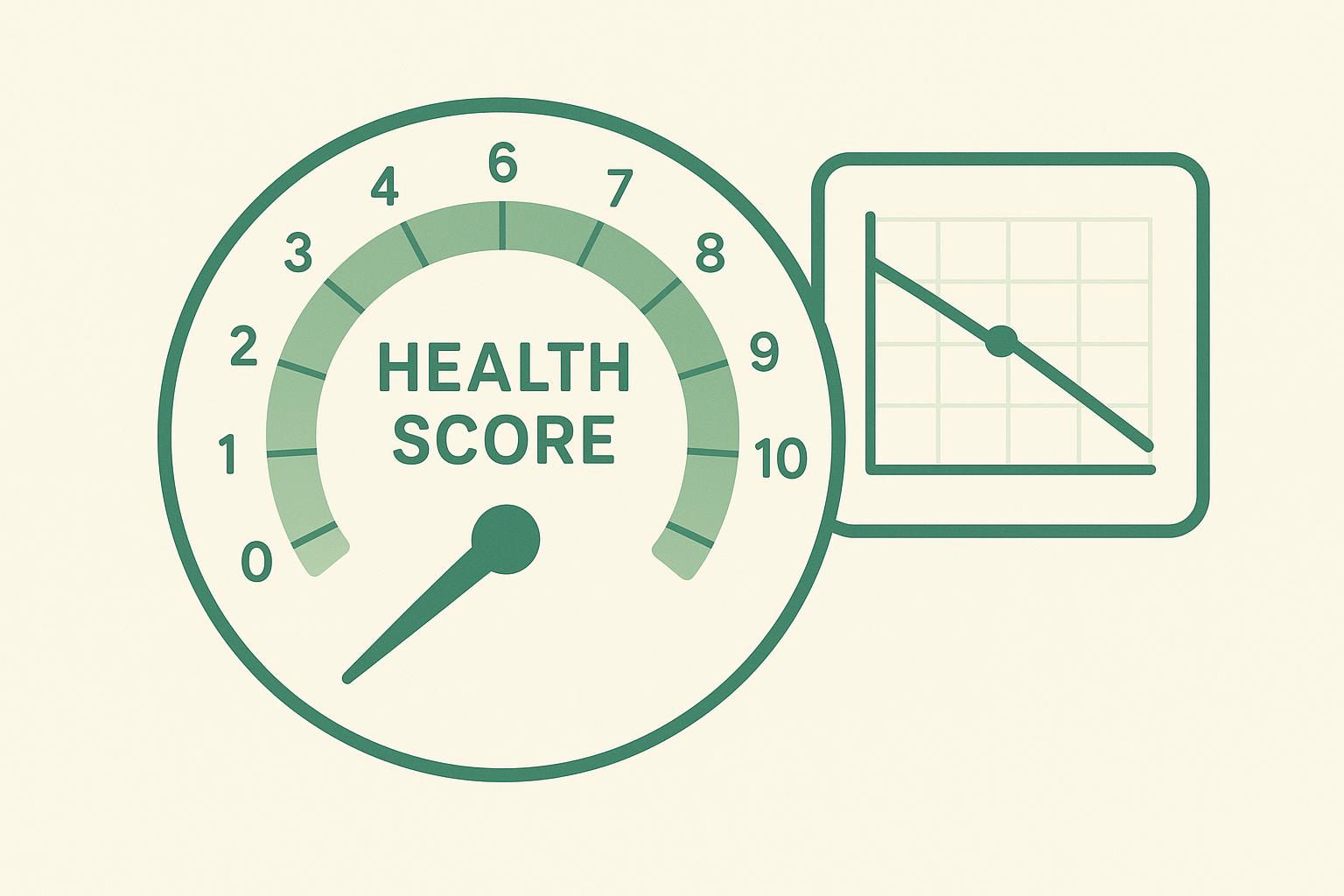
A continuous retention score complements churn calculation by flagging risk earlier.
Tools That Automate Churn Tracking
Manually pulling churn numbers from spreadsheets every month is time-consuming and error-prone, particularly as a client roster grows. Platforms built specifically for retention, such as ClientBloom, connect directly to the CRM, billing, and meeting tools a team already uses, then calculate churn and relationship health automatically.
For comparison, teams evaluating options often look at how a dedicated retention operating system stacks up against a traditional customer success platform; this comparison of ClientBloom and ChurnZero breaks down the differences. Likewise, businesses looking to go beyond calculation and into action can review this guide to reducing client churn and this overview of stopping silent client churn before it shows up in the numbers.
Frequently Asked Questions About Churn Calculation
What is churn calculation?
Churn calculation is the process of measuring the percentage of clients or recurring revenue a business loses during a set time period, usually expressed monthly or annually. It gives teams a single comparable number to track retention performance over time.
How do you calculate churn rate?
To calculate churn rate, divide the number of clients lost during a period by the number of clients you had at the start of that period, then multiply by 100. For example, losing 4 out of 80 clients in a month equals a 5% churn rate.
Why does churn calculation matter for service businesses?
Service businesses rely on recurring retainers, so losing clients directly reduces predictable revenue. Consistent churn calculation acts as an early warning system, surfacing retention problems before they compound.
What's the difference between customer churn and revenue churn?
Customer churn counts the number of accounts lost, while revenue churn measures the dollar value of recurring revenue lost. A business can have low customer churn but high revenue churn if the clients who left were its largest accounts.
How often should a service business run churn calculation?
Most agencies and consultancies should calculate churn monthly, then review the trend quarterly. Calculating it only once a year hides problems that could have been caught and fixed months earlier.
What is considered a healthy churn rate for agencies?
Benchmarks vary by industry, but many service businesses target an annual churn rate below 10 to 15%, which generally corresponds to roughly 1% monthly churn. Businesses with longer contracts or specialized services often aim even lower.
What mistakes make churn calculation inaccurate?
The most common mistakes include mixing time periods, ignoring contraction and downgrades, and failing to separate voluntary cancellations from failed-payment losses. Each of these distorts the real retention picture.
Should churn calculation include downgrades and partial cancellations?
Yes, when calculating revenue churn, downgrades should be included because they reduce recurring revenue even if the client technically stays. Leaving them out understates the true financial impact of client attrition.
How is churn calculation different from a Client Retention Score?
Churn calculation reports what has already happened, after a client has left or reduced spend. A Client Retention Score, by contrast, continuously scores the health of active relationships so teams can intervene before churn occurs.
How much does client churn cost a service business?
The cost depends on average contract value and churn rate, but research cited by Harvard Business Review shows acquiring a new client can cost five to twenty-five times more than keeping an existing one. That makes even modest churn reductions valuable to the bottom line.
Can churn calculation be automated?
Yes, churn calculation can be automated by connecting CRM, billing, and project management tools to a retention platform that recalculates the metric continuously. This removes manual spreadsheet work and reduces the risk of calculation errors.
What's the best way to reduce churn once you've calculated it?
Once churn calculation reveals a problem, the next step is segmenting at-risk clients, building a structured onboarding cadence, and creating intervention playbooks for early warning signs. Pairing churn calculation with a continuous health score helps teams act before cancellations happen.
Key Takeaways
Churn calculation is not just a reporting exercise — it is the foundation for every retention decision a service business makes. Getting the formula right, running it consistently, and pairing it with proactive signals like a Client Retention Score turns a lagging metric into a tool for action. Whether a team calculates churn manually each month or automates it with a platform like ClientBloom, the goal stays the same: catch at-risk clients early, and keep more of the revenue already won.

